
Fibre Infrastructure

The Digital Highways Powering South Africa's Connected Economy
Telecommunications towers are the backbone of mobile communications, fibre optic infrastructure is the nervous system of the digital economy.
Every email sent, every online banking transaction, every video streamed, every cloud application accessed and every mobile phone call ultimately depends on the rapid movement of data across fibre optic networks.
Although fibre cables are largely invisible—buried beneath roads, installed along railway lines, suspended on utility poles or routed through commercial buildings—they carry more than 95% of global internet traffic through interconnected terrestrial and submarine fibre networks. Mobile networks, data centres, financial institutions, hospitals, schools, government departments and businesses all depend on fibre for high-capacity, low-latency communications.
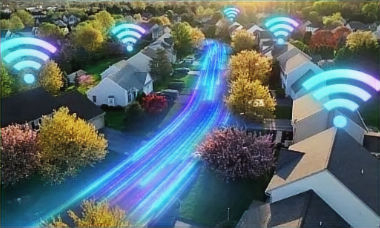
As South Africa accelerates its digital transformation, fibre infrastructure has become a strategic national asset. It supports economic development, attracts investment, enables smart technologies and provides the high-capacity connectivity required for 4G LTE, 5G and future communications technologies.
For landowners, Traditional Authorities, Communal Property Associations (CPAs), municipalities and property developers, fibre infrastructure presents both opportunities and responsibilities. Understanding how fibre networks are deployed, who owns them and how access rights are established is essential for sound commercial and governance decisions.
This chapter explores fibre optic technology, Fibre Network Operators (FNOs), backhaul connectivity, servitudes, wayleaves and the critical role fibre plays in modern telecommunications.
What Is Fibre Optic Infrastructure?
Fibre optic infrastructure consists of a network of glass fibres that transmit information using pulses of light rather than electrical signals.
Each fibre strand is thinner than a human hair, yet capable of transmitting enormous volumes of data over long distances with minimal signal degradation.
Unlike copper cables, fibre optics provide:
Extremely high bandwidth
Low latency
Minimal electromagnetic interference
Long-distance transmission
High reliability
Greater scalability
These characteristics make fibre the preferred medium for modern telecommunications.
How Does Fibre Optic Technology Work?
Traditional copper cables transmit electrical signals.
Fibre optic cables transmit light.
Inside each fibre strand, laser or LED light pulses represent digital information using binary code.
These light signals travel through the fibre by a phenomenon known as Total Internal Reflection, allowing information to move at extremely high speeds while maintaining signal quality over considerable distances.
Although often described as travelling "at the speed of light", the signals actually travel at approximately two-thirds the speed of light in a vacuum because of the optical properties of the glass.
Why Fibre Matters
Fibre infrastructure has transformed digital communications because it provides:
Greater Capacity
One fibre cable can carry thousands of simultaneous communications.
Faster Speeds
Modern fibre networks support:
Gigabit broadband
Multi-gigabit enterprise services
Cloud computing
Artificial Intelligence workloads
High-definition video
Lower Latency
Latency refers to the delay between sending and receiving information.
Low latency is essential for:
Video conferencing
Online gaming
Financial trading
Telemedicine
Industrial automation
Improved Reliability
Fibre is less susceptible to:
Electrical interference
Weather-related signal degradation
Lightning-induced disruptions
Fibre vs Mobile Networks
Many people mistakenly believe fibre and mobile networks compete with one another.
In reality, they are complementary technologies.
Fibre Networks | Mobile Networks |
Physical cables | Wireless radio signals |
Very high capacity | Flexible mobility |
Fixed locations | Mobile connectivity |
Used for backhaul | Used for user access |
Extremely low latency | Slightly higher latency |
A modern mobile network cannot function efficiently without extensive fibre infrastructure.
What Is Backhaul?
One of the most important yet least understood concepts in telecommunications is backhaul.
Backhaul is the connection between a telecommunications site—such as a Base Transceiver Station (BTS)—and the operator's core network.
Think of a cellular tower as a local road.
Backhaul is the national highway connecting that road to the rest of the country.
Without backhaul:
Phone calls cannot be completed.
Internet traffic cannot reach the wider internet.
Mobile applications cease functioning.
Data cannot reach cloud services.
Modern backhaul is increasingly delivered via fibre optic networks due to their superior capacity and reliability.
Fibre Network Operators (FNOs)
Unlike Mobile Network Operators, Fibre Network Operators (FNOs) specialise in constructing, owning and operating fibre infrastructure.
Their primary role is to build the physical fibre network that Internet Service Providers (ISPs), businesses and Mobile Network Operators use to deliver services.
FNOs typically do not sell internet services directly to end-users. Instead, they provide wholesale access to their infrastructure.
The Role of Fibre Network Operators
FNOs are responsible for:
Planning fibre routes.
Securing access rights.
Obtaining approvals.
Installing fibre cables.
Operating fibre networks.
Repairing faults.
Expanding network coverage.
Leasing fibre capacity.
Their investment in fibre infrastructure supports South Africa's digital economy by enabling high-capacity connectivity across urban and rural areas.
Fibre Deployment Methods
Fibre may be installed using several methods depending on the terrain, cost and environmental considerations.
Underground Installation
Cables are placed within trenches or ducts beneath roads and servitudes.
Advantages:
Better protection.
Reduced weather exposure.
Lower visual impact.
Aerial Installation
Fibre is suspended from utility poles or dedicated telecommunications poles.
Advantages:
Lower installation cost.
Faster deployment.
Easier maintenance.
Building Installations
Commercial buildings often contain internal fibre networks connecting tenants to external infrastructure.
Long-Distance Backbone Networks
National fibre backbones connect major cities, data centres and international submarine cable landing stations.
Servitudes and Wayleaves
The deployment of fibre often requires legal rights to cross land owned by another party.
Two common mechanisms are:
Servitudes
A servitude is a registered legal right allowing one party to use another party's land for a specific purpose, such as installing underground fibre optic cables.
Servitudes generally remain attached to the property, even if ownership changes.
Wayleaves
A wayleave is permission granted by a landowner or public authority to install and maintain infrastructure across land.
Unlike servitudes, wayleaves may not always be registered against the title deed and are often governed by contractual agreements.
Understanding the distinction is essential when assessing infrastructure rights and obligations.
Fibre on Communal Land
Deploying fibre on communal land involves additional governance considerations.
Depending on the applicable legal framework, engagement may include:
Traditional Authorities.
Communal Property Associations.
Municipalities.
Government departments.
Community representatives.
Land rights holders.
Obtaining the appropriate permissions before installation promotes transparency and helps minimise future disputes.
Fibre and 5G
The rollout of 5G has dramatically increased demand for fibre.
Why?
Because 5G Base Transceiver Stations generate significantly more data than previous generations of mobile technology.
To support these higher data volumes, operators increasingly require fibre connections to each telecommunications site.
As a result:
More fibre routes are being constructed.
Existing fibre capacity is being expanded.
Rural fibre investment is increasing.
Demand for strategic fibre corridors continues to grow.
Protecting Fibre Infrastructure
Fibre infrastructure represents a significant financial investment and requires ongoing protection.
Common risks include:
Accidental excavation damage.
Cable theft.
Vandalism.
Illegal connections.
Flood damage.
Construction activities.
Poor maintenance.
Damage to a single fibre cable can interrupt communications for thousands of users, making infrastructure protection a shared responsibility between operators, landowners and public authorities.
Commercial Considerations for Landowners
Where fibre infrastructure crosses or occupies private or communal land, landowners should understand:
The legal basis for installation.
Whether a servitude or wayleave exists.
The rights granted to the infrastructure owner.
Access arrangements for maintenance.
Responsibilities for reinstating disturbed land.
Compensation arrangements, where applicable.
Any restrictions placed on future land use.
Maintaining complete records of agreements, plans and correspondence supports effective governance and informed decision-making.
Fibre and South Africa's Future
South Africa's economic competitiveness increasingly depends on high-capacity digital infrastructure.
Fibre enables:
Smart cities.
Digital government.
Artificial Intelligence.
Precision agriculture.
Advanced manufacturing.
Remote healthcare.
Online education.
Cloud computing.
Financial technology.
Business innovation.
As fibre coverage expands into rural communities, it creates opportunities for investment, entrepreneurship and improved access to essential services.
Key Takeaways
Fibre optic infrastructure forms the high-capacity foundation of South Africa's digital communications network.
Fibre uses pulses of light to transmit data at very high speeds over long distances.
Fibre Network Operators (FNOs) build and manage fibre infrastructure, while Internet Service Providers and Mobile Network Operators use these networks to deliver services.
Backhaul connects telecommunications sites to the wider network and is increasingly provided by fibre.
Servitudes and wayleaves establish the legal rights required to install and maintain fibre infrastructure across land.
Fibre is indispensable to the success of 4G LTE, 5G, cloud computing and the broader digital economy.
Landowners should understand the legal, commercial and operational implications of fibre infrastructure located on or crossing their property.
Expert Insight
One of the most common misconceptions is that fibre infrastructure has little commercial significance because it is installed underground and largely out of sight. In reality, fibre routes are strategic assets that can influence future development, connectivity and investment. For landowners, Traditional Authorities and CPAs, maintaining accurate records of fibre installations, wayleaves, servitudes and access agreements is just as important as documenting cellular tower leases. Effective governance begins with understanding what infrastructure exists, under what authority it was installed and what rights and obligations apply.
Glossary
Backhaul: The high-capacity connection between a telecommunications site and the operator's core network.
Dark Fibre: Unused fibre optic cable that has been installed but is not yet transmitting data. It can be leased to telecommunications providers or enterprises.
Fibre Network Operator (FNO): A company that designs, builds, owns and manages fibre optic infrastructure.
Latency: The time taken for data to travel from its source to its destination.
Servitude: A registered legal right permitting one party to use another party's land for a specified purpose.
Wayleave: A contractual permission allowing infrastructure to be installed and maintained on land without transferring ownership.


Comments